Our Practices
As our denomination states, we believe in continuing the work of Jesus; Peacefully. Simply. Together.
Below are the practices and convictions we hold at Antelope Park Church of the Brethren.
Simplicity is our act of defiance—against greed, against systems that harm, and against the mentality of lack. We embrace sharing generously and a theology of “enough.” We live simply, so others can simply live.
Simplicity

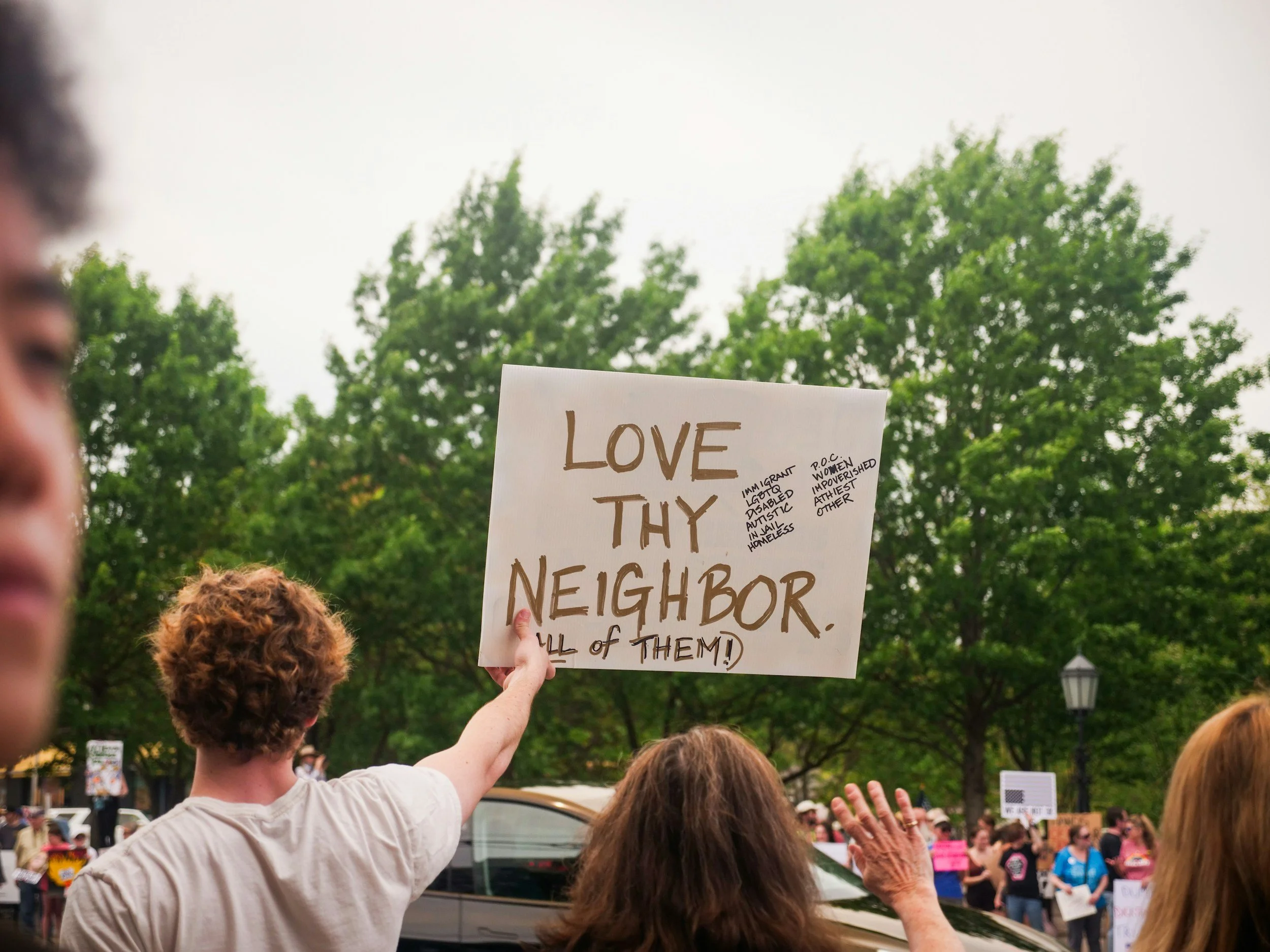
We open our doors, our tables, and our hearts, because in every guest, we see a reflection of the Divine. Hospitality is how we love our neighbors—practicing presence, generosity, and care right where we live, because Jesus shows us that heaven is found next door.
Hospitality
We believe there’s enough for everyone’s need, not everyone’s greed—so when we have more than we need, we build longer tables, not taller fences.
Generosity

As one of the historic peace churches, we’ve always been unapologetically pacifist—rejecting war in all its forms and choosing the way of Christ: love over violence, mercy over might.

Peacemaking
We pursue justice not as an ideal, but as action: standing with the oppressed, dismantling systems of harm, and building a world where everyone belongs.
Justice

We believe the church should be a place where everyone — especially our LGBTQ+ family — is able to belong, lead, and serve, because that’s the radical welcome of Jesus.
True inclusivity means no one sits at the margins.
Inclusivity
Our Convictions
We Understand Faith Through the Lens of Jesus
As we seek to understand and make sense of our faith, our starting place is Jesus. We ground our understanding of God in the Gospels (the first four books of the New Testament), where we meet Jesus through His teachings and His compassionate way of living. By centering our lives on Jesus, we’re continually shaped to trust God and love people more fully.
Anabaptism is one of the two historic traditions that shape who we are. This movement is deeply rooted in peacemaking, enemy love, separation of church and state, and caring for the needs of others — all inspired by the life and teachings of Jesus. We are driven by these values in everything we do. At our core, we remain confident in following the way of Jesus.
We are Rooted in Anabaptism
Pietism is the second historic movement that shapes our faith. In a world full of noise and complexity, we hold tightly to the mystery and wonder of a loving God. We don’t believe our beliefs can ever fully contain God — instead, we trust that God is at work in our modern world. We believe the Holy Spirit speaks to each of us, guiding us to live out the love of Christ in our own unique ways.
We are Rooted in Pietism
We are a Community for Each Other
We see our shared life and worship as a collaborative effort—one that extends far beyond our church walls. Our building isn’t our identity; it’s simply a tool for serving others. We invite everyone to join our weekly gatherings because we believe worship and ministry are richer when multiple voices and hands are involved.
Whether it’s reading Scripture, praying together, singing, teaching children, sharing meals, or serving our community, we value the unique gifts each person brings. It’s in these shared moments—where pastors, members, and friends alike contribute—that we truly become the body of Christ.
These words shape everything we do. Jesus didn’t just come to offer eternal life—He came to show us how heaven breaks into earth through love, grace, and justice. We believe Christ has no body on earth but ours, so we strive to be His hands, feet, and heart here and now.
This means seeing people not through judgment, but through the same hope and love God has shown us. As long as we’re here, we’re committed to loving God and loving our neighbors—bringing a little heaven to earth with every act of kindness, every shared meal, and every moment of grace.
“On Earth As It Is In Heaven”
We reject the pursuit of power as the world defines it—whether in the church or in society. The entanglement of church and state, beginning with Constantine in the 4th century, has too often twisted faith into a tool for control rather than a witness to love.
We refuse to let Jesus be co-opted as a symbol of worldly dominance. Instead, we follow the Prince of Peace, whose kingdom is built on humility, service, and collaboration. True unity isn’t found in hierarchy or dominance, but in the shared work of love and justice, where every voice is heard and no one is left behind.
We Recognize the Danger of Power
We are unapologetically people of peace. Christ didn’t just bring peace between God and humanity—He showed us how to live at peace with one another, even in a broken world. For us, that means actively resisting the cycles of violence, dehumanization, and conflict that tear us apart.
Our tradition, stretching back 300 years, has consistently rejected war and the logic of domination. But peace isn’t just the absence of violence—it’s the presence of justice, reconciliation, and relentless love. We’re committed to going beyond “not fighting” to building relationships, speaking up for the vulnerable, and fostering a community where everyone can truly thrive.
We are Called to be Peacemakers
We’re grateful for the wisdom of those who came before us—our church fathers and mothers—but we also recognize their blind spots. Like a child learning from their parents, we take what’s good, humbly acknowledge what’s not, and trust the next generation will do the same for us. That’s why we hold our theology with our hands wide open and our palms facing God, hoping we get more right than we do wrong. We don’t claim to have it all figured out, but we’re committed to letting grace and humility lead the way.